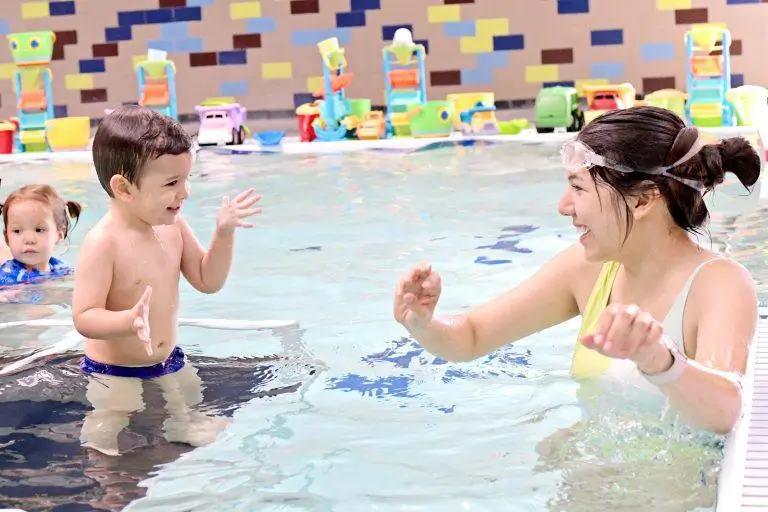
A lot of parents talk themselves out of starting early, and almost none of the reasons hold up once you actually look at them closely. Someone’s cousin heard babies can’t regulate body temperature well enough to swim. A neighbor swears lessons before age two are pointless because babies won’t remember any of it anyway. None of that lines up with how swimming lessons for babies actually work, but the myths spread faster than the facts do.
Most of these ideas started somewhere reasonable, usually an outdated guideline or a single bad experience that got repeated until it sounded like an established fact. Separating the two matters, because some of these myths genuinely delay a baby’s comfort in the water for no real reason.
Myth: Babies Are Too Young to Learn Anything in the Water
This one assumes learning only counts if it looks like a skill an adult would recognize, like a full stroke or independent floating. Babies aren’t learning strokes at this age, and that was never the point.
What they’re actually learning is comfort, breath control reflexes, and basic orientation in water, all of which lay groundwork for everything that comes later. A baby who’s relaxed and familiar with water at eight months has a real head start over one who’s never been in a pool by age three, even though neither one can technically swim yet.
Waiting until a child is “old enough to really learn” often just means waiting until any natural fear response has more time to set in first.
Myth: Cold Water Builds Resilience
Some parents assume a slightly uncomfortable pool temperature toughens a baby up, the same way people talk about cold showers building character in adults. Babies don’t process discomfort that way. Cold water mostly just makes a baby cry, tense up, and associate the pool with an unpleasant sensation rather than anything resembling resilience.
Comfortable, warmer water isn’t coddling. It’s just recognizing that babies lose heat faster than adults and don’t have the same tools to communicate discomfort beyond crying. There’s no version of this myth that actually holds up once you look at how a baby’s body regulates temperature.
Myth: Swim Diapers and Basic Precautions Are Overkill
A surprising number of parents skip proper swim diapers or basic pool hygiene precautions, assuming regular diapers or none at all will be fine for a short session. This isn’t really a myth about learning ability, but it’s common enough to mention because it affects whether lessons even happen consistently.
Facilities that maintain clear hygiene standards protect every baby in the pool, not just one family’s convenience. Skipping these small steps occasionally seems harmless, but it’s exactly the kind of shortcut that leads to closed pools, canceled sessions, and inconsistent lesson schedules, which hurts a baby’s progress more than the diaper choice itself ever would.
Myth: If a Baby Cries, They Hate the Water
Crying gets misread constantly. A baby who cries during the first few minutes of a session is far more likely reacting to newness, temperature, or separation anxiety than expressing genuine dislike of water itself. Plenty of babies who cried through their first two sessions were completely relaxed by their fourth.
Pulling a baby out the moment they cry, every single time, can actually reinforce the idea that crying is the way to escape an uncomfortable situation, which makes each future session harder rather than easier. A calmer approach, staying in the water a bit longer while soothing the baby directly, usually produces faster long-term comfort than immediately retreating.
This doesn’t mean pushing through genuine distress. It means recognizing that early tears are often about adjustment, not aversion.
Myth: Waiting Until They’re Older Makes Lessons Easier
This one sounds logical on the surface. Older babies and toddlers can follow instructions better, so lessons should go smoother, right? In practice, it often works the opposite way. Toddlers who’ve had no prior water exposure sometimes develop stronger fear responses than infants would have at a younger age, partly because toddlers are more aware and more capable of expressing resistance, and partly because they’ve had more time to pick up on other people’s hesitation around water.
An eight-month-old generally doesn’t have the developmental capacity to build a strong fear association the way an eighteen-month-old who’s had time to develop opinions and stubbornness might. Waiting isn’t neutral. It’s a choice that sometimes makes the eventual introduction harder, not easier, especially if that wait stretches into the toddler years without any water exposure at all.
Myth: All Programs Teach the Same Way
This assumption causes more frustration than almost any other myth on this list. Not every program approaches babies the same way, and the differences matter more than most parents realize before they’ve experienced a few different options. Some schools swimming infant classes push skill progression too fast, while others focus almost entirely on comfort and bonding before introducing any structured skills at all.
Neither approach is universally right or wrong, but they produce very different experiences depending on a baby’s temperament. A program that rushes a naturally cautious baby can create resistance that takes months to undo, while the same pacing might work fine for a more easygoing baby.
See also: Why Are Custom Website Design Services Essential for Business Success?
Myth: Searching Won’t Actually Help You Find the Right Fit
Parents often assume that typing swim lessons for babies near me into a search bar just returns a list of interchangeable options with no real way to tell them apart. That’s rarely true once you actually start comparing programs directly instead of just scrolling past the first few results.
Ratios, water temperature, instructor experience with infants specifically, and how a program handles crying or distress all vary enough to matter. A quick conversation usually reveals more than a website description ever will. If you’re trying to figure out whether a specific approach fits your baby’s temperament, connect with us directly and ask how a typical first session actually unfolds before assuming every option looks the same on paper.
Why These Myths Persist
Most of these ideas spread because they sound reasonable in passing conversation, and nobody stops to question them until they’re already acting on the assumption. A worried parent hears one story about a bad experience and applies it broadly, without realizing pacing or facility differences were the actual issue, not the baby’s age or ability.
Letting go of a few outdated assumptions usually opens the door to starting earlier and with less anxiety than parents expect going in. The water itself was never really the problem. The myths built up around it were.
